This article contains affiliate links. As an Amazon Associate I earn from qualifying purchases.
When I got my first car, I knew almost nothing about maintaining it.
What I did know, checking the oil and recognizing that black gritty oil meant it was overdue for a change, came from watching my father work on cars when I was a kid. I didn't learn it formally. It just seeped in over years of standing nearby while he was under something.
That osmosis approach worked, to a point. Beyond the basics, I was on my own with a Haynes manual that assumed more prior knowledge than I had. I figured things out as they came up, which is how most people do it. It works until something expensive goes wrong that didn't have to.
The version I'm describing here takes less time than a Haynes manual and covers what actually matters for a driver who isn't a mechanic and doesn't want to be one. That's most of us.
What "Basic Maintenance" Actually Means
You don't need to know how cars work.
You need to know enough to keep yours running correctly, catch small problems before they become expensive ones, and recognize when something needs professional attention.
The list of things that actually matters for a non-mechanic is shorter than you think.
Oil: The One That Can't Wait
Your engine needs oil to function. Running low damages it. Running out destroys it.
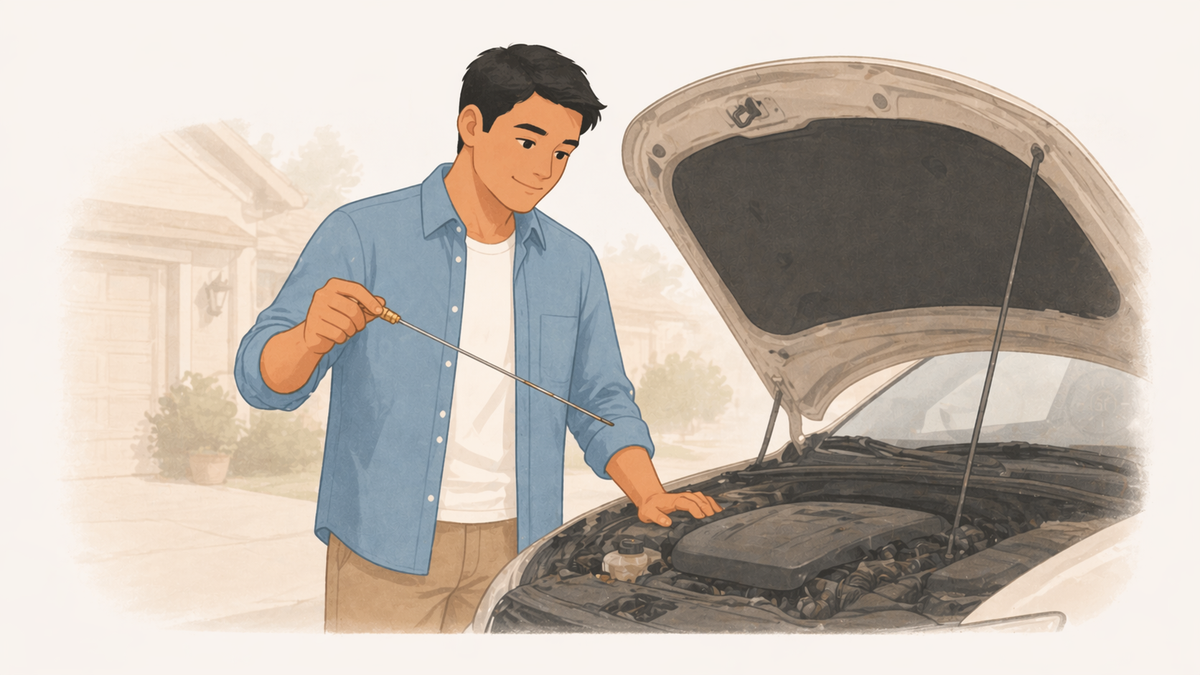
How to check it: Engine off, car cooled down. Open the hood and find the dipstick, which usually has a brightly colored handle. Pull it out, wipe it clean with a rag, reinsert it fully, pull it out again. The oil level should sit between the two marks near the bottom. If it's below the lower mark, add oil.
What the color tells you: Dark brown is normal. Black and gritty means it's overdue for a change. Milky or foamy means something is wrong and the car needs to go to a shop before you drive it further.
How often to check it: Once a month is a reasonable habit. Always check before a long road trip.
Oil change intervals: The old "every 3,000 miles" rule is outdated for most modern cars. Most manufacturers now recommend somewhere between 5,000 and 10,000 miles depending on the oil type. Your owner's manual has the actual number for your vehicle. So does the sticker your shop puts in the corner of your windshield after each change.
Tires: The Things Actually Keeping You on the Road
Tire pressure: The correct pressure for your tires is on a sticker inside your driver's door. Not on the tire sidewall, which shows the maximum pressure, not the recommended one. Use a gauge. Underinflated tires affect handling, reduce fuel efficiency, and can cause a blowout.
Check pressure when the tires are cold, meaning the car hasn't been driven for a few hours. Digital gauges are a few dollars at any auto parts store. The Accutire digital gauge is the one most people land on. Reads in 1 PSI increments, fits in a glove box.
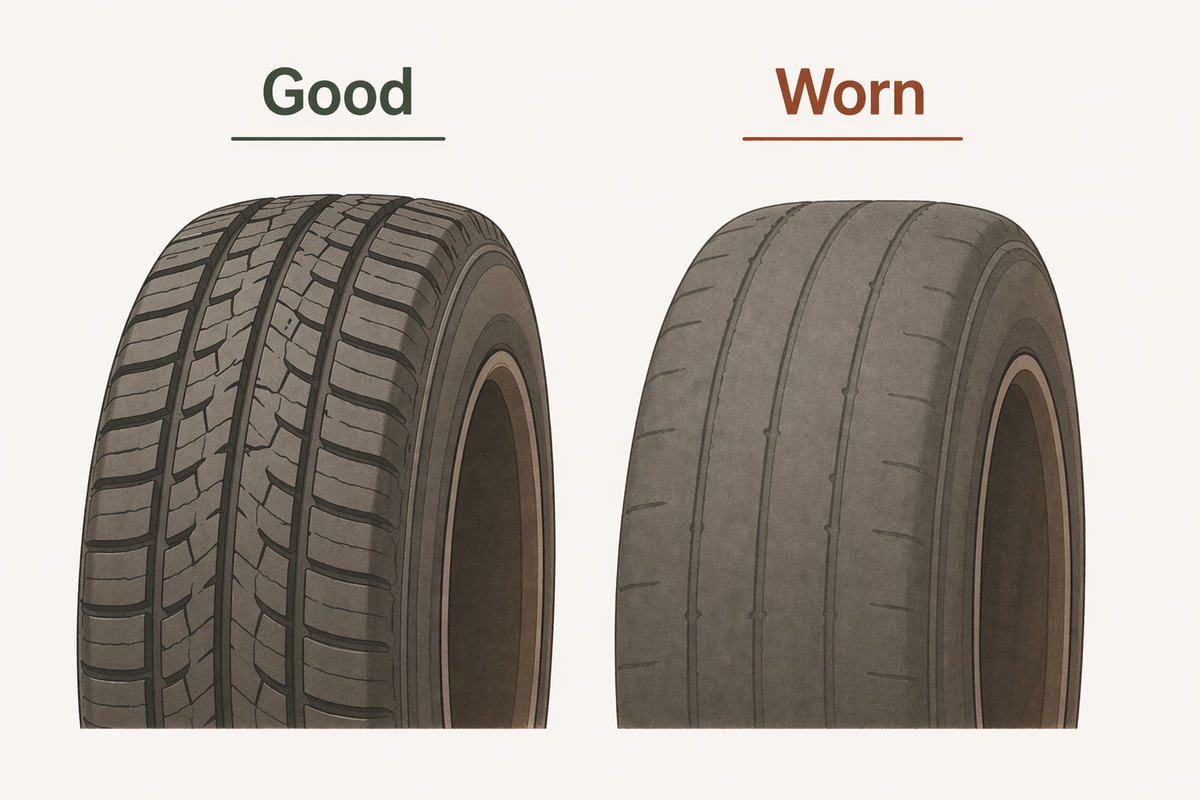
Tread depth: Worn tread means reduced grip, especially in rain. The quick check: press a penny into a tread groove with Lincoln's head going in first. If you can see the top of his head, the tread is worn and the tire needs replacing.
Visual check: Once a week, walk around the car before you get in. A tire losing pressure slowly will look noticeably lower than the others. Catching it before it's flat is better than catching it in a parking lot.
Warning Lights: The Ones That Actually Matter
Your dashboard tells you when something needs attention. Most people either ignore warning lights or panic when one comes on. The better response is somewhere between those.
Oil pressure light: This one is urgent. Low oil pressure means the engine isn't being lubricated. Stop the car when it's safe to do so and check the oil level. Do not keep driving with this light on.
Temperature warning: The engine is overheating. Pull over when safe, turn the car off, and do not open the radiator cap. Call for help.
Check engine light: Covers a wide range, from a loose gas cap to a serious engine issue. If it's solid, get it checked soon. If it's flashing, get off the road. A flashing check engine light typically means an active misfire that can damage the catalytic converter. A BlueDriver scanner plugs into the OBD2 port under the dash, pairs with your phone, and tells you the actual code. The difference between "drive it home" and "tow it now" is usually right there.
Tire pressure light (TPMS): One or more tires is low. Check all four when you can.
Battery light: The charging system isn't working correctly. You may have limited time before the car dies. Get to a shop.
The pattern: some lights mean "handle this week." Some mean "handle now." Knowing which is which matters.
Other Fluids Worth Knowing
Coolant: Keeps the engine from overheating. Check it cold. There's a plastic reservoir with MIN and MAX lines. It should be between them. Low coolant is a serious problem, not something to top off and ignore.
Brake fluid: In a sealed reservoir under the hood. Usually doesn't need attention unless there's a leak or your brakes feel soft or spongy. If either of those is happening, that's a shop visit, not a top-off.
Windshield washer fluid: Low stakes, but annoying when it runs out at 70 mph behind a truck in winter. Keep a jug in the trunk.
A Simple Maintenance Schedule
You don't need to memorize all of this. You need a system.
Monthly: Check oil level. Walk around and look at the tires.
Every 3 months: Check tire pressure. Check coolant. Check washer fluid.
Per your owner's manual: Oil change interval. Tire rotation (usually every 5,000 to 7,500 miles). Cabin air filter. These vary by car. The maintenance schedule in your manual has the actual numbers for yours.
When something feels wrong: Unusual noise, vibration, smell, or handling change. Take it in before it gets worse. This is the most important item on the list. Small problems that get addressed stay small. Small problems that get ignored rarely stay small.
The Manual You're Not Reading
There is a book in your glove box that knows more about your car than any generic guide.
It tells you the correct oil type for your specific engine. The tire pressure spec for your specific tires. What that specific warning light means on your specific dashboard. The service intervals for your transmission, your belts, your filters.
You can also find it online for free, for any make, model, and year.
It is not a riveting document. But it is the most accurate resource available for the vehicle you actually drive, and most people have never opened it. That's worth changing.
The New Driver's Parent Checklist is a 4-page printable for parents teaching a teen to drive. Pre-drive checks, the four skill stages, and word-for-word scripts for the hard moments. Download it free →
Most car problems give you warning signs before they become expensive.
The people who catch them early aren't doing anything complicated. They're just checking.