This article contains affiliate links. I may earn a commission on purchases made through these links.
I grew up in Arizona. The main weather event there is heat. Occasionally, a haboob, a wall of dust that rolls across the valley and turns the sky brown for about an hour.
I am not exactly a veteran of driving in difficult conditions.
The most relevant experience I have is from a cross-country road trip. I ended up in Florida for a stretch, and one afternoon I found myself on a highway that had nothing on either side except ocean. No shoulder to speak of. Just road and water.
A storm hit fast.
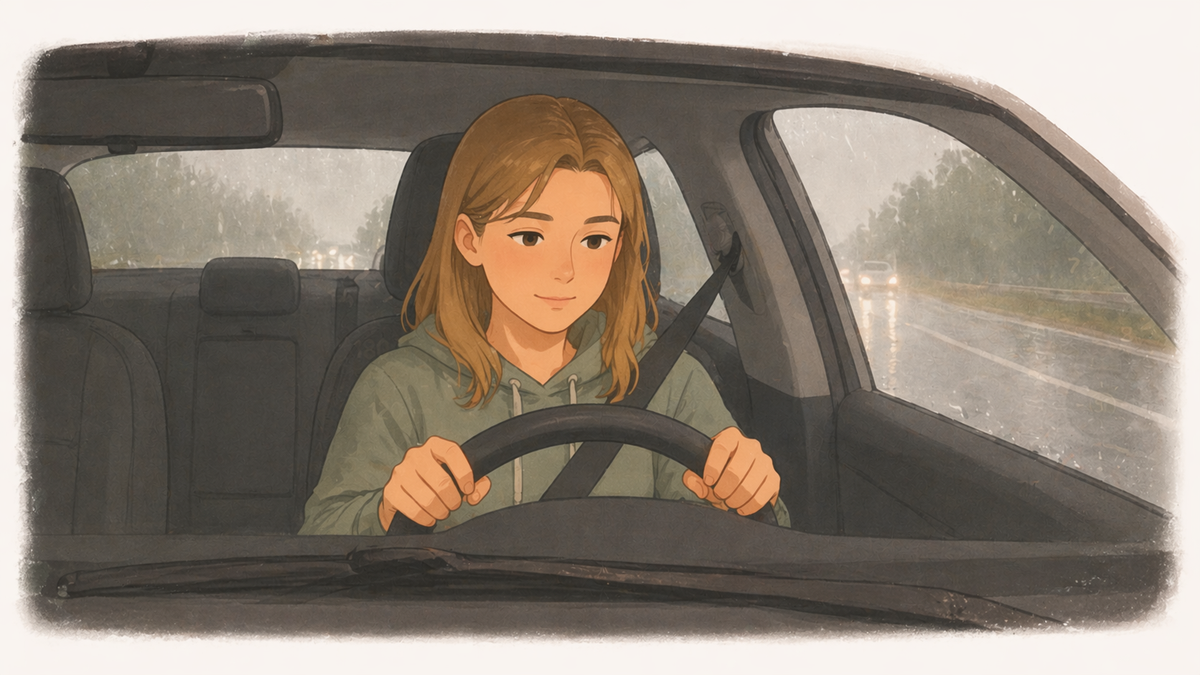
I remember thinking about my tires, specifically whether they were good enough for what was currently happening. They were fine. But the visibility wasn't. The rain came down hard enough that the lines on the road were hard to make out. Cars were pulling over. I pulled over too, hazards on, and we all just sat there and waited.
That was the right call. It felt obvious in the moment and I've thought about it since, because not everyone does it. Some people keep driving through conditions where they genuinely cannot see. I don't know what calculation they're making, but it's the wrong one.
One other thing about haboobs specifically, since I actually have experience with this: there's a known protocol in Arizona to pull over and turn your lights off during one. The reasoning is that if drivers can see your lights, they might follow them right into the back of your parked car. I heard this advice and then kept my lights on anyway. The logic of "someone might drive into my lights" felt less dangerous to me than "no one can see I'm here at all." I still think that was correct. But it's one of those situations where there is no perfect answer, just a judgment call you have to make in about four seconds.
The point is that bad weather driving is a different skill from regular driving. The road changes. The car's behavior changes. And the correct response is almost always the one that costs you the least: slow down, increase your space, and if it gets bad enough, stop.
Why Bad Weather Is a Different Skill
Clear roads are forgiving. Bad weather isn't.
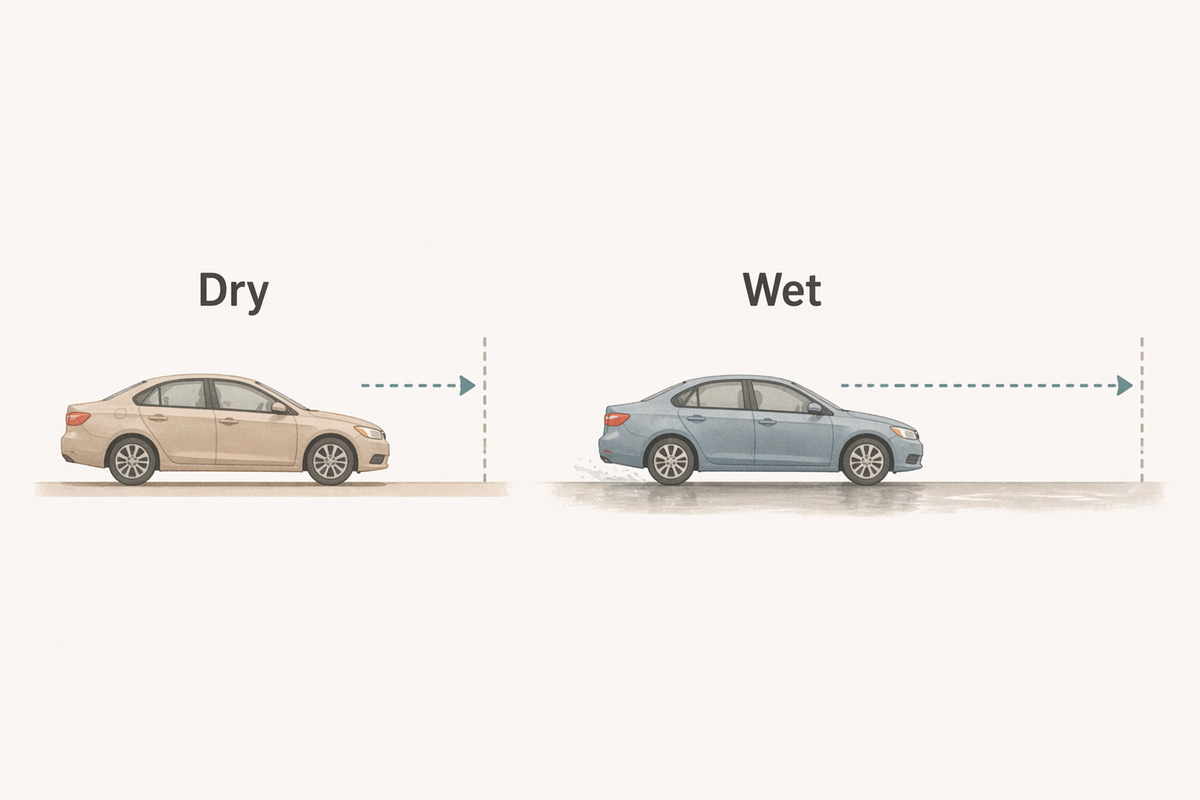
Stopping distances increase significantly in rain, and dramatically in snow or ice. The gap that was adequate yesterday is not adequate today. Hydroplaning, reduced visibility, and black ice are real hazards that show up fast.
New drivers tend to respond to bad conditions in one of two ways: they don't change anything about how they drive, or they panic and overcorrect. Neither works. The goal is a third option: calm, deliberate adjustment before conditions require it.
Driving in Rain
The main risks are reduced traction and longer stopping distances.
Slow down. Not dramatically, but meaningfully. A few mph less than you'd normally drive gives you noticeably more stopping room.
Increase your following distance. Double the gap between you and the car ahead. Braking in wet conditions happens slower than it does on dry pavement.
Headlights on. Not because you can't see. Because other drivers need to see you. In most states, rain means headlights on by law.
Watch for standing water. Driving through it at speed can cause hydroplaning, where the tires lose contact with the road and you're briefly floating. If you feel the car go light or start to drift, ease off the gas gently. Don't brake hard. Don't steer sharply. Let the tires find the road again before doing anything else.
Driving in Snow and Ice
Snow and ice are a different category. Stopping distances on ice can be ten times longer than on dry pavement. That number is not an exaggeration.
Drive slower than feels necessary. If the road looks icy, treat it as icy. Speed is the first thing to adjust.
Accelerate and brake gently. Smooth inputs keep the tires from breaking traction. Sudden movements are where it goes wrong.
Don't rely on all-wheel drive. AWD helps you get moving. It does not help you stop. Braking on ice is the same regardless of what drivetrain you have.
If you start to skid: don't hit the brakes hard. Steer gently toward where you want to go and ease off the gas. Let the car settle before you ask anything else of it.
When in doubt, don't go. There is no award for driving in genuinely dangerous conditions. The car can stay parked. The errand can wait.
Low Visibility: Fog and Heavy Rain
When you can't see far ahead, everything else has to slow down to match.
Use low beams in fog, not high beams. High beams reflect off fog and make visibility worse, not better.
Increase your following distance significantly. You need more time to react to whatever appears out of the gray.
Follow the lane markings, not the car ahead. The car ahead might do something unexpected. The lines on the road won't.
Pull over if it gets bad enough. Hazard lights on, fully off the road, wait it out. This is not quitting. It's the correct decision. I pulled over on that Florida highway and so did everyone else who was thinking clearly.
What's here is the parent-coached version of bad-weather driving. Aceable's driver's ed covers the formal curriculum side, including the rules most state tests care about.
Try This
1. Drive in rain with them before they drive in rain alone. Don't avoid bad weather during the learning process. Go with them for a low-stakes session. Talk through what you're adjusting and why as you go.
2. Find an empty parking lot after it snows. Let them feel what it's like when the car doesn't respond the way it normally does. A controlled skid in an empty lot is worth ten conversations about what a skid feels like.
3. Teach them to check conditions before they leave. Look at the weather. Give themselves extra time. Decide if the trip is worth it. That last one is a skill too.
The New Driver's Parent Checklist is a 4-page printable for parents teaching a teen to drive. Pre-drive checks, the four skill stages, and word-for-word scripts for the hard moments. Download it free →
Most bad weather driving mistakes aren't recklessness. They're just a lack of preparation.
Drivers who handle bad conditions well aren't better drivers in some fundamental sense. They've just thought about it before it happened.
That's something you can give a new driver before they ever leave the driveway.