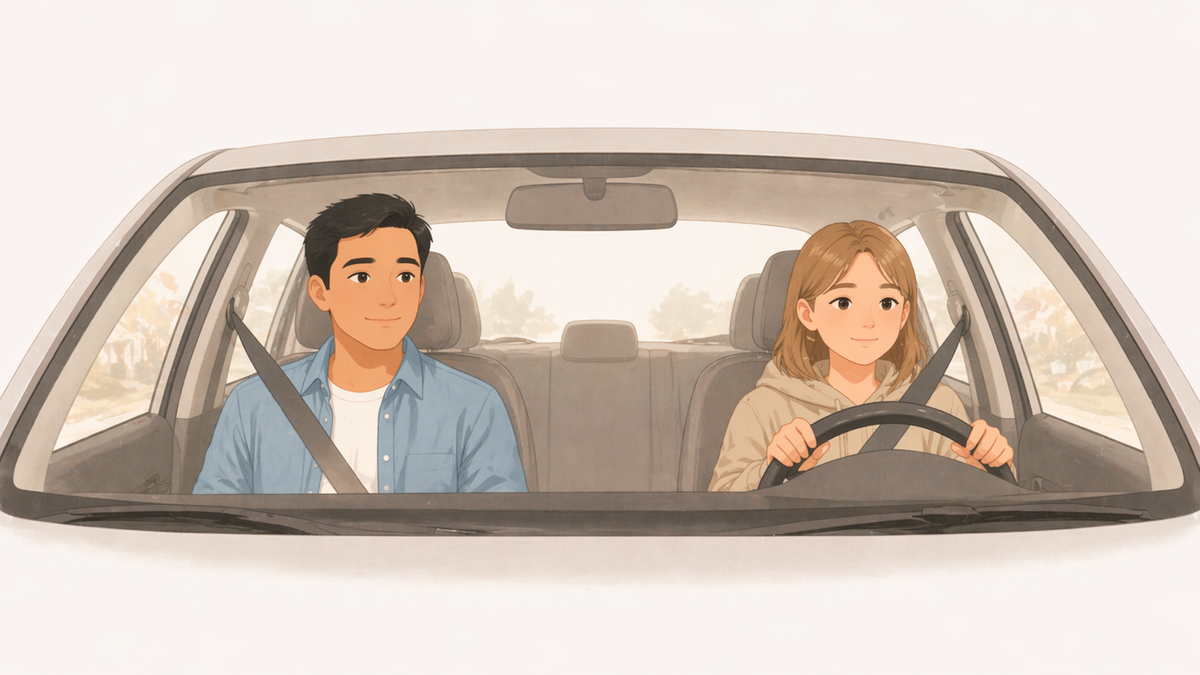
We're somewhere in the middle of this.
She's in driving school. A professional is handling most of the structured lessons, which I think was the right call. A professional is calmer in that seat than I would be. At least for the foundation.
I've been in the passenger seat too, but less than you'd think. The school is doing the work. What I've contributed is more like context. The mindset stuff. The things that aren't on the written test.
What I didn't expect is how much I'd learn from the parts I'm not present for.
What I Trust Without Seeing
She's taken direction well. That surprised me a little, honestly. Not because I doubted her, but because she's a teenager and I know what teenagers are like about being corrected. She has opinions. She has confidence. She does not typically receive feedback about her choices with quiet gratitude.
Behind the wheel, though, she listens. She adjusts. She asks questions that suggest she's actually thinking about what she's doing, not just going through the motions to get the license.
I've heard this from her instructors. I've seen it in the limited time I've been in that seat with her. I believe it without having witnessed all of it, which is a new experience for me as a parent.
There is something to learn in that. Trusting someone's competence when you haven't personally verified every part of it.
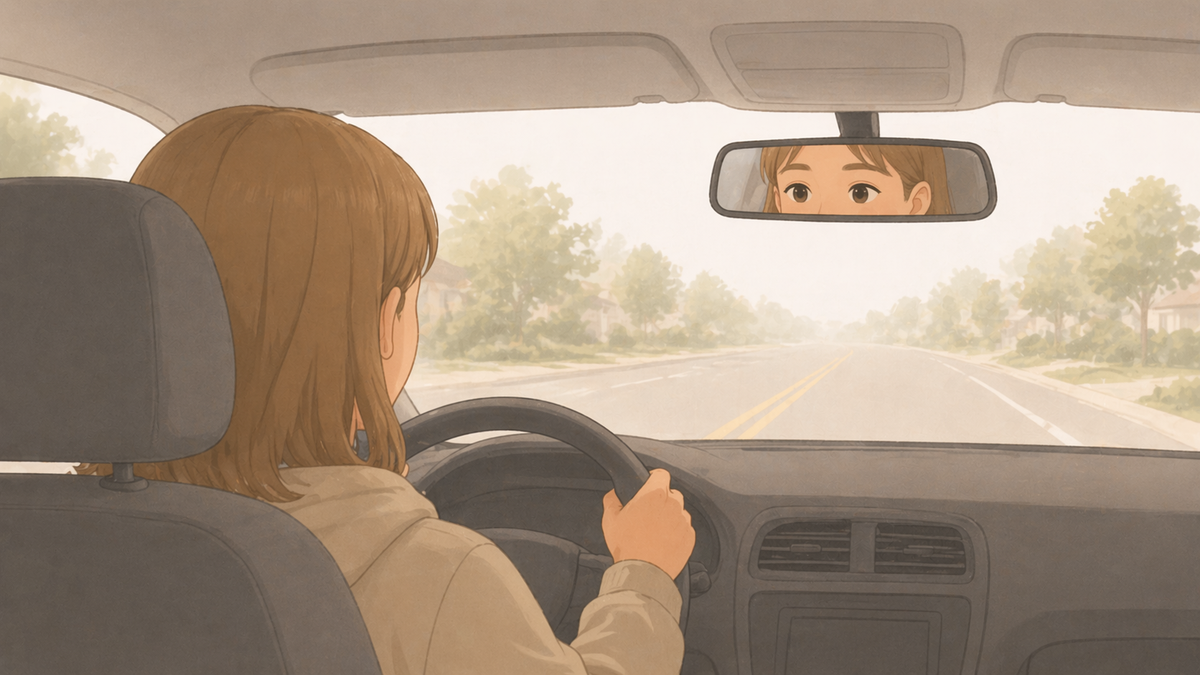
What I'm Watching For
My concern isn't her fundamental ability. The mechanics are coming. The awareness is there.
What I watch for is overconfidence.
There is a specific kind of teenager who does something well a few times and then stops treating it as a thing that requires attention. They start looking at their phone. They start thinking about what's next. They stop tracking what's happening around them and start assuming everything is fine.
The car is not forgiving of that. Most things in a teenager's life are. The car is not.
I've said it to her directly: you cannot control what everyone else on the road is doing. Do not make it so you can't control what you're doing. That is the combination that gets people hurt. One driver being careless is manageable. Two is not.
I don't know how much of that lands. I know I've said it more than once, which is either good parenting or evidence that I don't trust my own delivery.
What I Didn't Expect to Feel
Pride is the obvious one and it's real. Watching her handle something difficult and do it competently is one of the better feelings available to a parent.
But there's something else I didn't expect. A kind of recalibration.
The whole time she's been learning, I've been the one with the knowledge. I knew how to drive. She didn't. I had the answers. She was asking the questions.
That gap is closing fast. In a few months it will be gone. She'll be a driver. Not a learner, not a student. Someone who drives.
And then the thing I've been preparing her for is complete. The skill is hers. She doesn't need me for it anymore.
That's the goal. I know it's the goal. It still takes a second to sit with.
What the Passenger Seat Actually Teaches You
You can say "check your mirror" but you can't look for her.
You can say "slow down" but you can't take your foot off her accelerator.
The passenger seat teaches you that the limit of what you can do for someone is smaller than it feels like it should be. You can prepare them. You can narrate. You can be calm when they make a mistake so they're more likely to tell you about the next one.
What you can't do is be in control.
That's not a new lesson for parents. But driving makes it concrete in a way that's hard to ignore. She is behind the wheel. The car goes where she points it. I am there to help, and then I am not there at all.
Try This
1. Let them name the mistake first. When something goes wrong in the car, ask what they would have done differently before you explain it. They usually already know. Letting them say it means it actually sticks.
2. Say something when they get it right. Not excessive praise. Just acknowledgment. New drivers get a lot of feedback that isn't positive. A simple "good read on that intersection" lands.
3. Don't fill every quiet moment. Some of the best conversations happen after a lesson, on the way home, when nobody is trying to have a conversation. Leave space for those.
The New Driver's Parent Checklist is a 4-page printable for parents teaching a teen to drive. Pre-drive checks, the four skill stages, and word-for-word scripts for the hard moments. Download it free →
We're in the middle of it.
She's not done learning. I'm not done worrying. The solo drives are coming. The confidence is building.
What I know so far: she's better at this than I expected her to be, and I'm less in control of how it goes than I expected to be.
Both of those things are probably fine.