This article contains affiliate links. As an Amazon Associate I earn from qualifying purchases.
I've been in four accidents.
The first one, I was 17. Coming out of a Circle K parking lot with friends, in an 88 Honda Civic. A Dodge Ram hit us broadside. Six people in the backseat of that Civic. Miraculously, nobody was seriously hurt. I broke my collarbone, which I still consider lucky given that my side was the one that got hit.
The second was in a high school parking lot. Another teen, texting. One-handed T9, presumably very important message. He tapped my bumper. Scratches. No real damage. He cried. We exchanged information.
The third time, I watched it happen in the mirror. Traffic in front of me was stopped. The car behind me wasn't slowing down. Then it did, into me. They were "in a hurry" and gave me their insurance information. The information was fake.
The fourth: a car making a wide left turn out of a shopping center, still moving slowly when it shouldn't have been. I slammed the brakes. The car behind me didn't. Three cars total.
Four accidents across however many years of driving. Different situations. Different causes. One thing was the same in all of them: the moment the impact happened, I stopped thinking in feelings and started thinking in sequence. Determine what happened. Check the people. Figure out what comes next. I didn't have a manual for it. Nobody had walked me through it. But the process was the same every time, and it worked.
That's what I want my daughter to have before anything goes wrong.
The Thing Emergencies Actually Test
It's not skill. It's not knowledge. Those help, but they're not the deciding factor.
The thing emergencies test is whether you can slow your brain down long enough to do anything useful.
The instinct in a sudden, stressful situation is to react before thinking. That reaction is usually wrong. The two-second pause (stop, assess, then act) is worth practicing before you ever need it.
Car Breakdowns: The Most Common One
If something goes wrong with the car while driving, the sequence is simple.
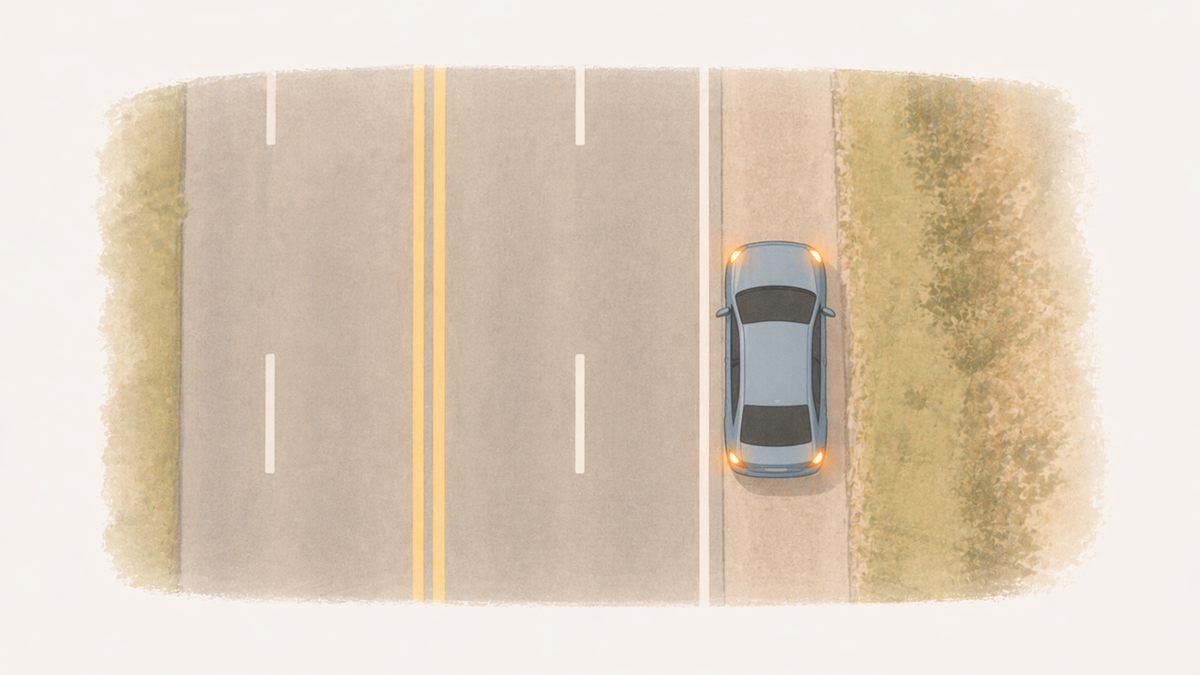
Get off the road. Everything else comes after this. Pull as far right as possible. A parking lot or side street is ideal. The shoulder works if that's all there is.
Hazard lights on immediately. Before calling anyone. Before figuring out what's wrong. Hazards on.
Stay in the car if traffic is moving nearby. The side of a fast road is more dangerous than the inside of the car. Call for help from inside.
Tell someone where you are. Street name, cross street, or drop your location in a text. "I don't know where I am" is not useful information for the person trying to find you.
Accidents: What to Do in the First Two Minutes
Check if anyone is hurt. Yourself first. Then anyone else in the car. Then the other driver, if it's safe to approach.
Call 911 if anyone is injured. Don't try to evaluate how serious it is. Call and describe what you see. Let them evaluate.
Don't move the car unless it's creating a hazard and you can move it safely. A fender-bender in a low-traffic area is one thing. A highway accident is not.
Exchange information. Name, phone number, insurance company, policy number, license plate. Photograph their license and insurance card. The third accident I mentioned, the one with the fake insurance, would have been handled differently if I'd photographed anything on the spot. The lesson is to get it on your phone before anyone drives away, not to trust that they'll sort it out later.
Take photos of the scene. Both cars, the road, any damage, the position of the vehicles. Before anything moves.
Don't apologize or admit fault. Not from dishonesty. Just because you don't know yet exactly what happened. You weren't the only one on the road. That's what insurance investigations are for.
What to Keep in the Car
This is a short list. Not a survival kit.
A phone charger, always in the car. A portable jump starter or Energizer 2-gauge cables. Roadside assistance saved in your contacts, either AAA or your car insurance company's roadside line. Your insurance card in the glove box. A small flashlight.
That's mostly it. If those five things are taken care of, you're better prepared than most people.
If you want a single ready-made option, the Lifeline 68-piece kit covers the basics in one box: cables, flashlight, first-aid, reflective triangle. Cheap insurance for a new driver.
Try This
1. Have the conversation before something happens. Not as a lecture. Just run through it out loud together. What would you do if the car broke down on the way to school? What if you got rear-ended in a parking lot? The answers don't need to be perfect. The point is to have thought about it once before it's real.
2. Make sure they know where to find things. Insurance card in the glove box. Roadside number in the phone. They don't need to have it memorized. They need to know where to look.
3. Practice the pause. The most useful thing in any emergency is the moment before you act. Slow down. Look at what's actually happening. Then move. That's a habit that can be practiced in low-stakes situations until it becomes the default.
The New Driver's Parent Checklist is a 4-page printable for parents teaching a teen to drive. Pre-drive checks, the four skill stages, and word-for-word scripts for the hard moments. Download it free →
Four accidents over the years. Each one different. Each one fine in the end, more or less.
What I remember from all of them is that the people who made things worse were the ones who panicked or checked out. The people who helped (including, occasionally, me) were the ones who took a second, assessed what was happening, and did the next obvious thing.
That's not a special skill. It's a decision to stay in your head when your instincts want to take over.
You can decide that before it's necessary.