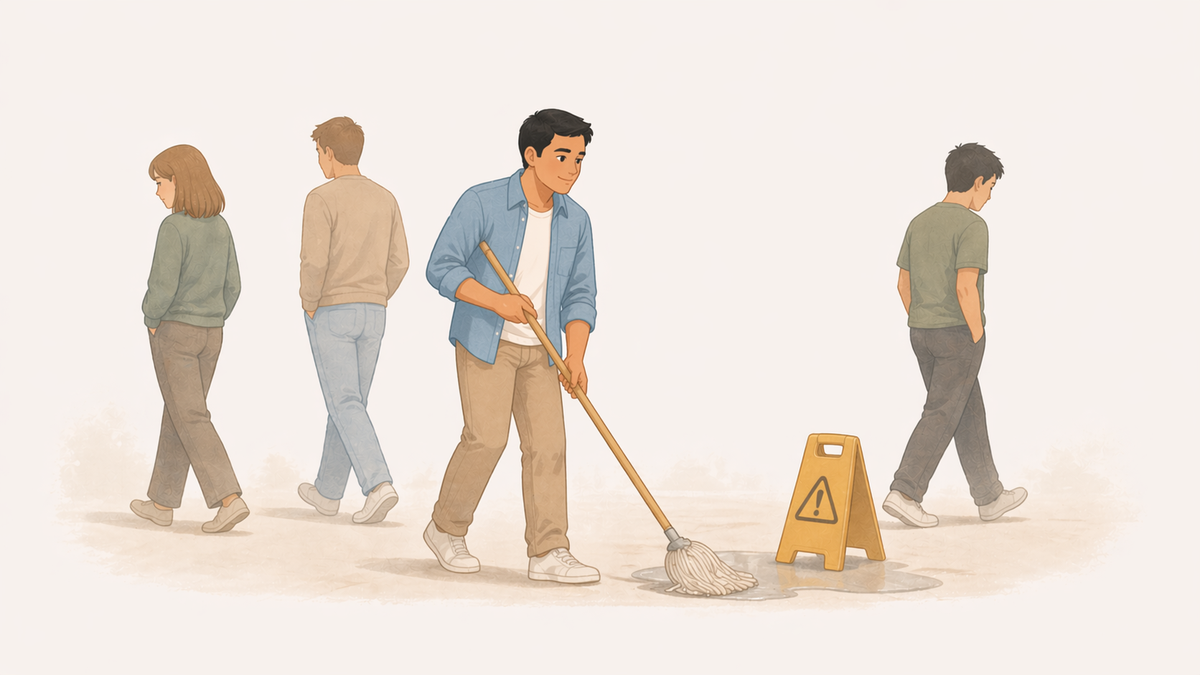
Responsibility isn't something people talk about much.
But you notice it quickly when it's there.
And you notice it just as fast when it's not.
The Lesson
Most people know what responsibility looks like.
Knowing and doing are different things.
In practice, responsibility comes down to small choices made all the time. Do you handle what's in front of you, or find a reason it's not your problem? Do you own a mistake early, or wait and see if anyone notices? Do you finish what you started, or leave it for someone else?
Nobody gets this right every single time. But the people who get it right more often than not build something over time.
The first time they follow through, it takes effort. The second time, it's a little easier because they know they can do it. The third time, it starts to feel normal. Eventually it's just how they operate.
Reliability becomes habit. Habit becomes reputation. Reputation becomes the kind of trust that opens doors, at work, in relationships, and in every part of life where other people are involved.
That cycle starts with the small choices nobody else is watching.
The Real Skill
Responsibility isn't about being perfect.
It's about ownership.
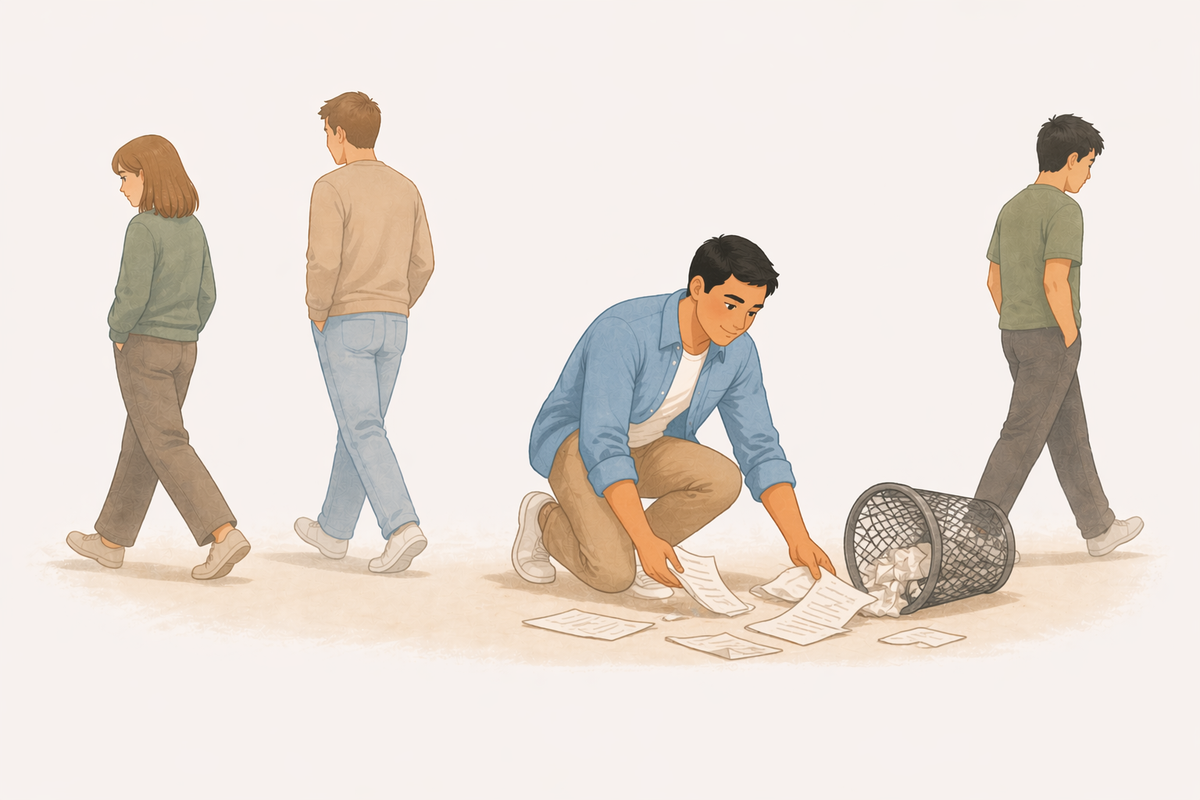
You handle what's yours. You don't make excuses when something goes wrong on your watch. You don't wait to be told twice.
And when you make this a habit, when you pay attention to problems early, follow through on what you said you'd do, and show up on the days you'd rather not, something accumulates.
People stop wondering if you'll come through.
They just know you will.
That's the whole cycle. And it has to start somewhere.
It usually starts with the small things. The ones that look easy to skip until they aren't.
Try This
1. Handle what's yours without being asked. If you see something in your area that needs doing, do it. Don't wait for someone to notice.
2. Own mistakes early. The longer you wait, the worse it gets. A quick acknowledgment costs almost nothing. Waiting costs a lot more.
3. Don't wait to be told twice. If you need repeated reminders, that's feedback worth taking seriously.
4. Fix what you can, even when you didn't cause it. This is where responsibility separates from obligation. You're not doing it because it's technically yours. You're doing it because it needs to get done.
5. Don't pass problems along. If something lands with you, try to solve it before it moves to someone else.
Teach Your Kid Almost Anything is a free starter framework for raising a capable kid. A simple five-step method that works on almost any skill, plus a competence inventory to work through over the years. Download it free →
Responsibility isn't complicated.
But it's also not automatic.
It's a decision you make over and over, in small moments, mostly when nobody is watching.
The people who make it consistently are the ones everyone else eventually counts on.