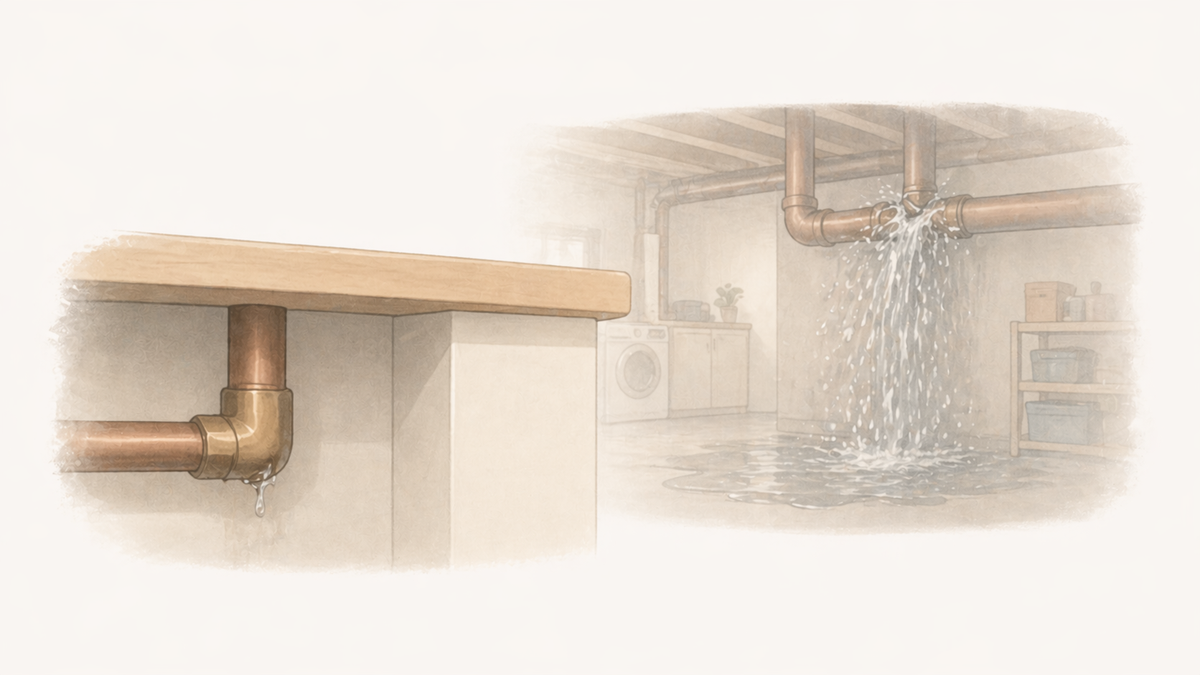
Most big problems were small ones first.
Something came up early and got pushed aside. Not because it was hard to deal with. Because it didn't feel urgent yet.
That's almost always how it goes.
The Lesson
There's a pattern to how problems grow.
A noise in the car that comes and goes. A conversation that keeps getting avoided. A subscription charge you don't recognize but it's only a few dollars. A relationship where small things are piling up but nobody has said anything yet.
None of these feel like real problems at first. They're inconveniences. Easy to ignore.
But small things don't usually stay small.
That noise becomes a repair bill. The avoided conversation becomes a real problem between two people. The charge you ignored turns out to be the first of many. The unspoken things accumulate until someone says something that's been building for months.
The delay is almost always what makes it worse. Not the problem itself.
Most of these things, caught early, take ten minutes to handle. Left alone, they become something you have to rearrange your life around.
The Real Skill
The people who handle things well don't have fewer problems.
They just deal with them earlier.
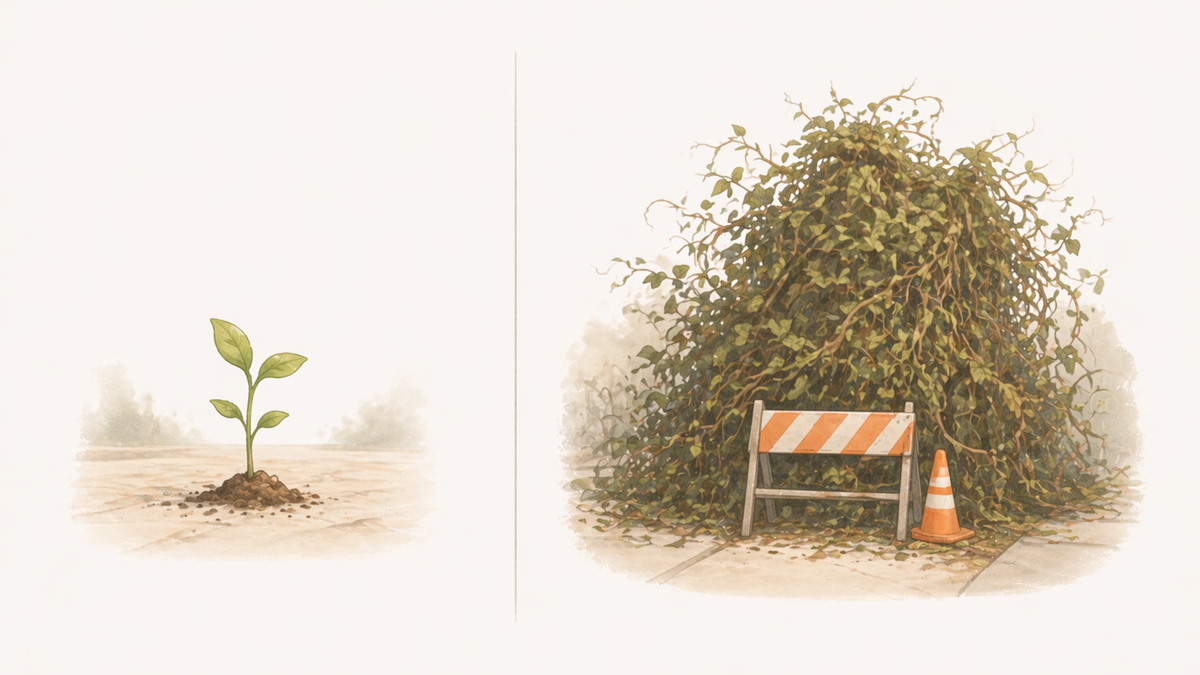
They've learned to take small things seriously before those things earn the right to be called big ones. That takes a little discipline, because small problems don't feel urgent. It's easy to tell yourself it'll resolve on its own.
Sometimes things do resolve on their own.
Most of the time, they just get more expensive. In money, in time, in the energy it takes to deal with something that got out of hand.
The window for easy fixes doesn't stay open.
Try This
1. Notice what you're avoiding. The things that keep getting pushed to tomorrow are usually the ones that will cost you most later.
2. Deal with small things while they're still small. It almost always takes less time than you think. The delay is the problem, not the task.
3. Pay attention to repeated signals. If the same thing keeps coming up, it is not going away on its own. It's asking to be dealt with.
4. Don't assume it will fix itself. A small percentage of things improve without action. The rest just wait.
5. Make small maintenance a habit. A little attention on a regular schedule keeps most things from building up. This applies to cars, money, relationships, health, and anything else you want to keep working.
Teach Your Kid Almost Anything is a free starter framework for raising a capable kid. A simple five-step method that works on almost any skill, plus a competence inventory to work through over the years. Download it free →
Most problems are manageable.
But only for a while.
The earlier you deal with something, the less it costs you. In every sense of that word.
That's responsibility in practice. Not heroic. Just early.