This article contains affiliate links. I may earn a commission on purchases made through these links.
I started worrying about this when she was 12.
Not in a planning-ahead kind of way. Just a quiet dread that would show up sometimes.
By 14, it was a monthly thing. And then she turned 15 and started bringing it up herself. She wanted her permit. She wanted to drive. She wanted to get out and do what she wanted, when she wanted.
She's not a great student. Missing assignments, never studies. But she passed her permit test on the first try.
Weird how that works when you actually care about something.
My dad taught me to drive in a community college parking lot. He was calm the whole time. Patient. Waving at other drivers to go first, or by way of apology when we made a mistake. I remember thinking that was just how it was supposed to go.
She has her permit now. We're starting her with a driving school, which I think is the right call. A professional is going to be calmer in that seat than I am.
But I already know what it's going to be like when my turn comes.
I'm going to be, if I'm being real, preparing for death.
Not because I expect her to do anything wrong. But because I know I can't control everyone else on the road.
That's my actual concern. Not that she'll forget how to brake or stall out at a light.
It's that she'll wait to react instead of thinking ahead.
The Lesson
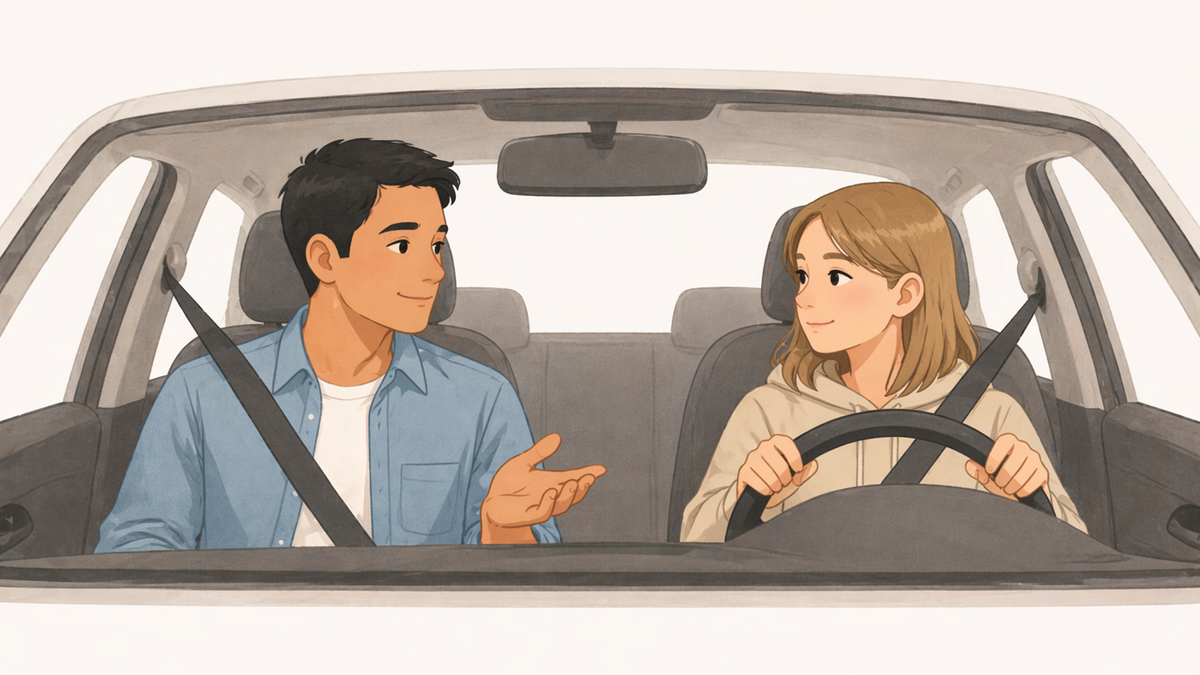
Before she pulls out of the driveway for the first time, I'm going to tell her one thing that I told her when we talked about driving recently:
"Drive like everyone else on the road is about to do something stupid."
Not as a negative take on people. Just a real one.
Because on paper, people are supposed to use their signals, stop fully at stop signs, check before they turn, and pay attention.
But that's not always what happens.
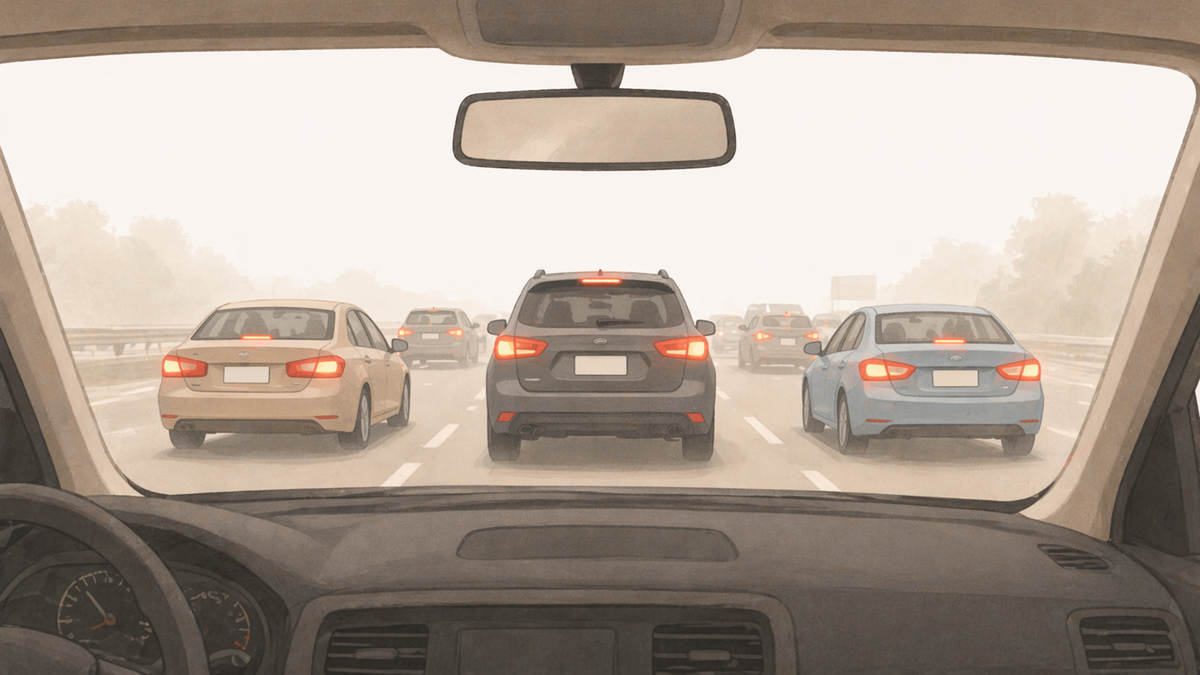
People drift. They brake suddenly for no reason. They miss their exit and cut across three lanes. They're texting. They're driving with one hand and a coffee in the other. They got cut off two seconds ago and haven't fully recovered.
None of that is malicious. It's just human.
And if you're waiting to react to it, you're already behind.
The Real Skill
Good drivers aren't the ones who just know all the rules.
They're the ones who see things before they happen.
They notice the car drifting before it crosses the line. They see brake lights two or three cars ahead, not just the one right in front of them. They already have a plan before anything goes wrong.
That's what defensive driving actually is. Not fear. Just awareness.
And once you develop it, you start seeing it show up everywhere. At work. With money. In how you handle pretty much anything. The people who stay ahead of problems aren't faster at reacting. They just spotted it earlier than everyone else.
Try This
Whether you're learning to drive or teaching someone, a few things make a real difference:
1. Leave more space than feels necessary. Most problems happen because there's no room to react.
2. Look two or three cars ahead. What's happening further up the road matters more than what's right in front of you.
3. Assume someone might do something unexpected. If you're already ready for it, it stops being a crisis.
4. Don't take it personally. Someone cuts you off, let it go. It's not worth it.
5. Put the phone down. Not just because it's illegal. Because you can't anticipate anything when you're not watching.
The New Driver's Parent Checklist is a 4-page printable for parents teaching a teen to drive. Pre-drive checks, the four skill stages, and word-for-word scripts for the hard moments. Download it free →
Her driving school will cover the mechanics. The rules. How to park, what to do at a four-way stop, how to handle a merge. All of that matters.
If you're still figuring out the formal side of this, Aceable runs the bookwork side of driver's ed on a phone or laptop. Available in California, Texas, Florida, and a handful of other states. The Resources page has alternatives if Aceable doesn't cover yours.
But this is the thing I want her carrying before any of that starts.
You can't control what everyone else does out there. All you can do is pay attention and give yourself enough room to handle it.
That applies to a lot more than just driving.