
I used to think if I was busy, I was doing well.
Lots of things in motion, constant activity, rarely a quiet moment.
That had to mean something.
But then I started paying attention to who was actually getting things done.
Some of the busiest people I've worked with had very little to show for it.
Some of the most effective ones looked, from the outside, like they weren't doing much at all.
The Lesson
Being busy and being useful are not the same thing.
Busy looks like jumping between tasks. Answering every message. Starting things and circling back later. Reacting to whatever comes up next.
It feels like a lot because it is a lot. But most of that effort doesn't move anything forward.
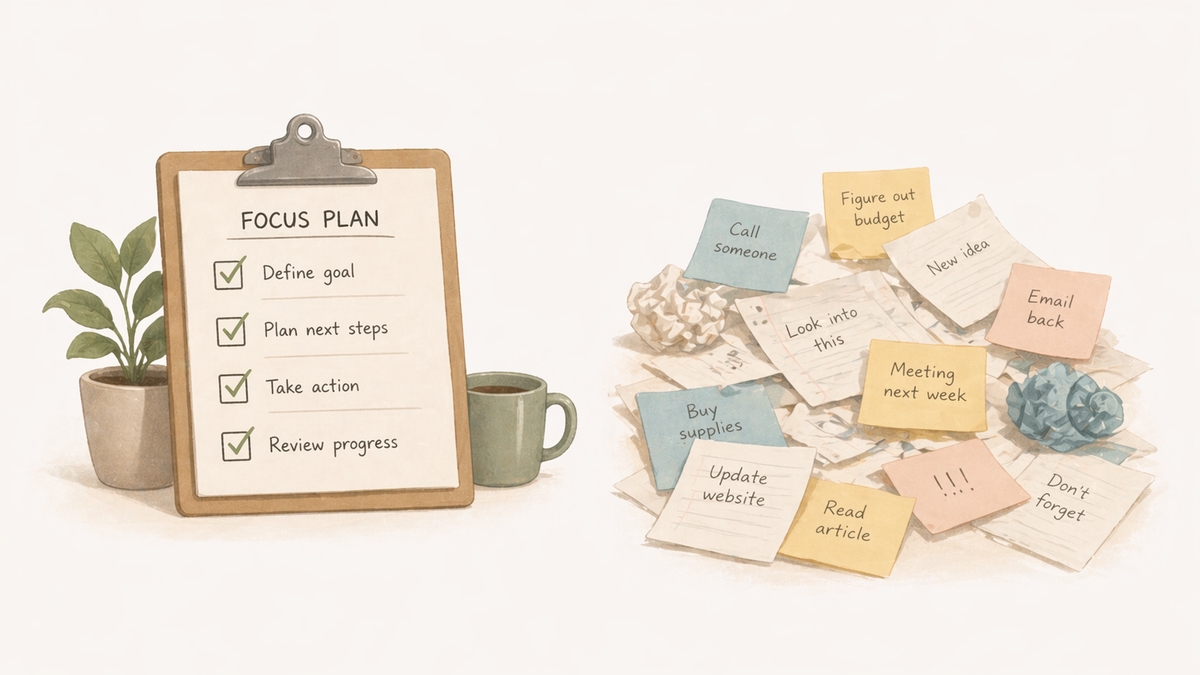
The problem is that without breaking your work into small, clear objectives, it's almost impossible to tell the difference. You're doing things. People can see you doing things. But nothing is completing. Nothing is closing.
At the end of the day, you feel like you achieved nothing.
Because you kind of didn't.
The Real Skill
The fix isn't complicated.
Start by having a conversation about when something is actually expected. That sounds obvious, but most people skip it. They start working without knowing what "done" looks like, or when done is supposed to happen.
Once you have that, build a task list with whoever needs the thing done. Then make your own sub-task list.. the steps only you need to know about. Small, specific, completable.
This applies everywhere. Work, home, something you're doing for yourself.
The more you practice building these lists, the better you get at it. The better you get at it, the more people take notice.
Ask someone who lives by a checklist what it feels like to cross something off. You'll understand why they do it.
More importantly: you'll start finding free time you didn't think you had.
Try This
1. Before you start, ask when it's expected. If you don't know what "done" looks like, you can't get there.
2. Break the work into small, specific steps. Not projects. Tasks. Things you can actually finish in one sitting.
3. Make a sub-list for yourself. The one just for you, with the steps only you need. Nobody else has to see it.
4. Cross things off. It sounds obvious. It isn't.
5. Protect time to actually do the work. Finishing requires time where you're not reacting to something else.
Teach Your Kid Almost Anything is a free starter framework for raising a capable kid. A simple five-step method that works on almost any skill, plus a competence inventory to work through over the years. Download it free →
Busy can look a lot like useful from the outside.
It can also look like being reliable without actually being reliable, or like thinking ahead without ever closing the loop.
The difference is whether you planned it.